
Assurance of Learning Toolkit
Measurable Learning Through Business Simulations
Marketplace Simulations combines immersive decision-making with built-in assessments to show you not just what students know, but how their thinking evolves over time. Track progress from initial decisions to final outcomes. Use real-time insights to guide improvement throughout the semester and ensure that your students are future-ready.
How Does Assurance of Learning Work in Marketplace?
Let Students Prove Skills in a Business Simulation
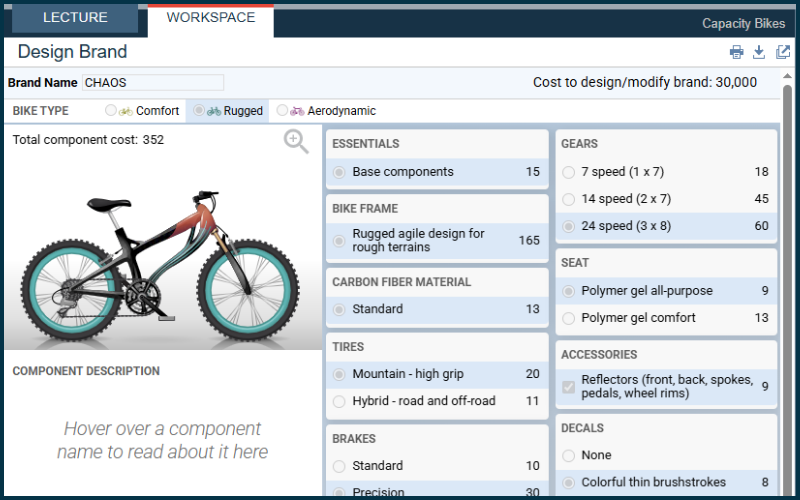
Students launch and manage a startup, making decisions across marketing, finance, operations, and more.
This hands-on experience proves that students aren’t just learning about business—they’re also capable of doing business. It naturally displays your students’ critical thinking, creativity, strategic planning, and ability to create value in a new market. Working as teams also fosters teamwork, communication, and cultural competence.
Track Performance with Balanced Scorecard
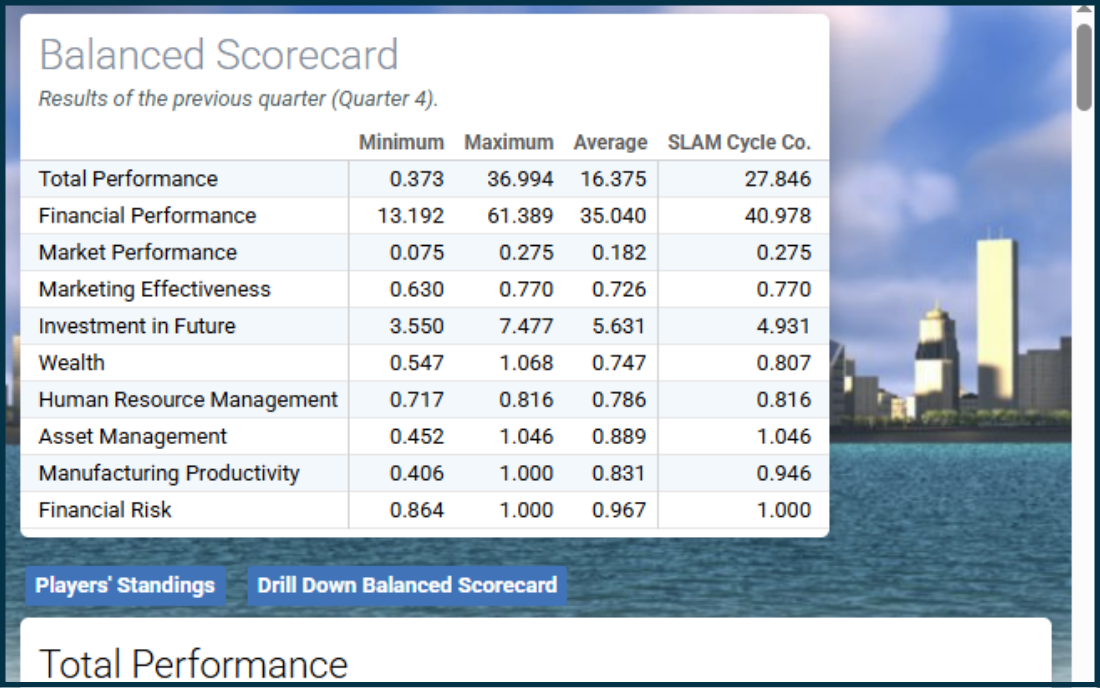
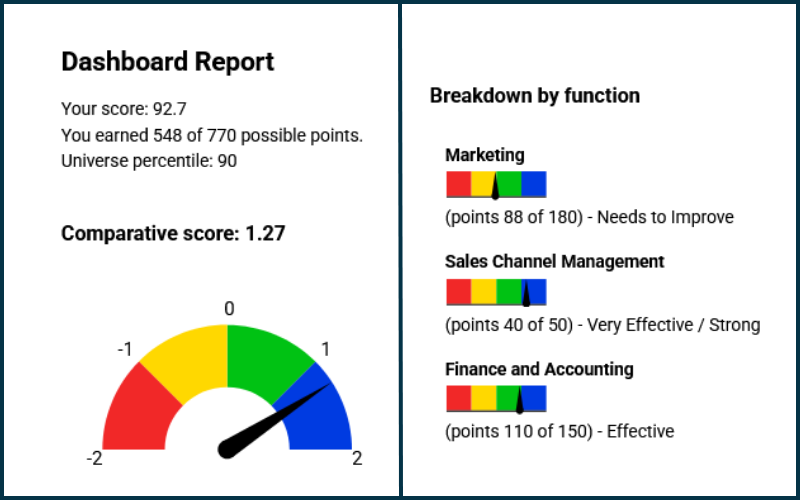
The Balanced Scorecard gives each team an objective performance scores for every business function and their overall performance. Updated each round, it mirrors the metrics used by real companies and helps students connect their decisions to long-term outcomes. Quarter-by-quarter comparisons give you insights to assess student learning and preparedness. It’s a powerful tool for feedback, improvement, and integrated learning.
Translate Experience into Career Insights
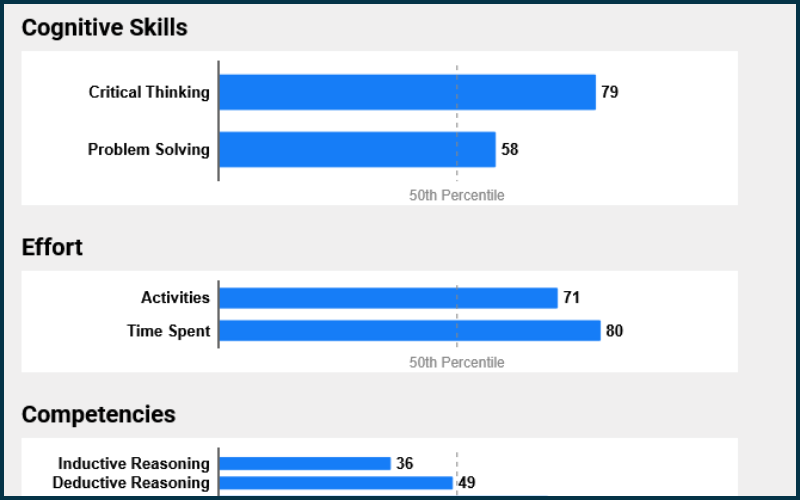
Throughout the simulation, our Career Readiness Reports algorithm analyzes how each student approached challenges and performed over time. At the end of the simulation, each student receives a personalized report that highlights strengths and uncovers areas for growth. It gives students the language to talk about their skills with future employers and can even help guide career decisions.
Give Students a Voice with Peer Evaluations
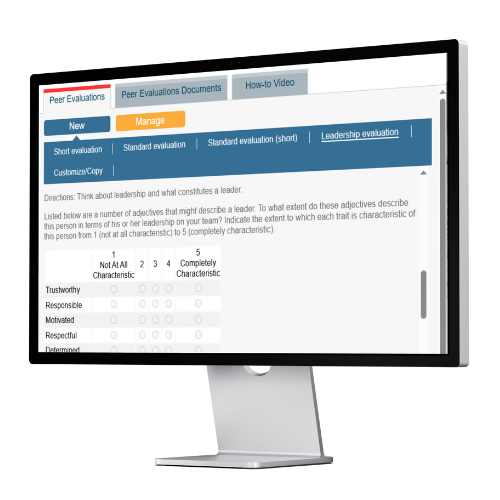
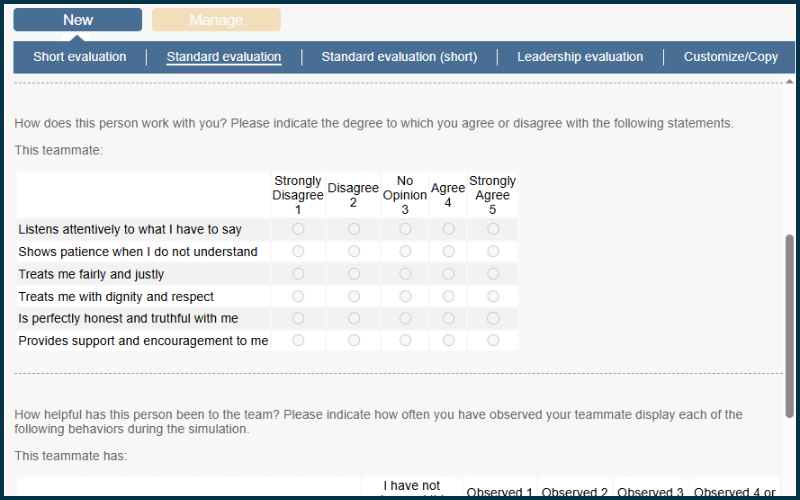
Peer Evaluations let individual students assess one another’s contributions across teamwork, professionalism, and leadership. Use our customizable templates to gather feedback throughout the simulation. You’ll gain clearer insights into team dynamics and add an extra layer of accountability in a collaborative learning environment.
Objectively Assess Situational Awareness
The Customized Objective Learning Assessment (COLA) tests each student’s ability to perceive, comprehend, and predict business conditions—based on their firm’s unique position in the simulation. This closed-book, auto-graded assessment reveals how well students understand their business environment and provides instructors with individual-level insights into strategic thinking and decision-making.
Coach Students with Rubrics and Executive Briefings
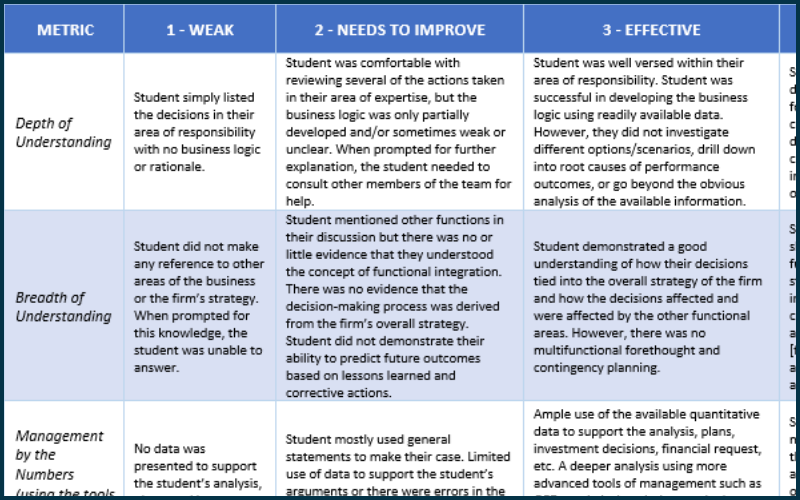
Executive briefings and business reports give students a chance to explain their strategic decisions and reflect on results. Instructors can use optional rubrics to act as coaches—guiding communication, sharpening logic, and helping students grow. Over time, students show visible improvement in their decision-making and ability to articulate business insight. Rubrics are available to assess students’ pitches, presentations, and final reports.
Discover How Marketplace Helps You Meet Assurance of Learning Standards.
Explore Marketplace’s Built-In Assessments
Career Readiness Reports
Reveal your students’ strengths—and where they have room to grow. Career Readiness Reports evaluate students’ real decisions and outcomes in the simulation and compares them to other learners around the world.
Each student receives a personal report on how they performed in 24 core metrics, such as critical thinking, problem solving, and innovation. They’ll also receive guidance on how to grow weaker competencies.

Tracks performance throughout the simulation
Get quantifiable data on students’ skills.
Spot trends across classes and tailor courses to students’ needs.
Customized Objective Learning Assessments
Measure how well your students perceive, comprehend and predict business conditions. This closed-book assessment generates unique questions for each team based on their position within the simulation.
Do they know how their team compares to the market? Do they understand their competitors? Can they predict who will take the lead next? The COLA will reveal each student’s comprehension and show you how they compare to other students on the same educational level.
Administer as early as Quarter 4
Measure situational awareness and predictive abilities.
Assess students through individual and comparative reports.
Simulation Knowledge Checks
Challenge your students to grow their awareness of the simulated market and their place in it. Simulation Knowledge Checks are open-book quizzes with seven to 10 questions about the elements of the simulation.
Do your students understand the nuances of the market? How to analyze the data presented to them? What actions they can take to improve their sales? Simulation Knowledge Checks will ensure that they do.
Administer in the first four to five quarters.
Identify which students are paying attention.
Create early grading opportunities.
Accreditation is Powered by Assessments
Accrediting organizations such as AACSB, ACBSP, and EQUIS set standards to assess how well colleges of business achieve their learning goals. The goal is to improve the effectiveness of the curriculum and create future-ready students. Our Assurance of Learning (AoL) solutions offer a great way to assess your students’ performance, both individually and as a team. You can also track their learning progress.
Let’s look at a few examples.
Balancing Knowledge and Skills
Programmes should be well-designed with a learner-centred focus, clear learning outcomes and an appropriate balance between the acquisition of knowledge and skills. Delivery methods should be diverse and reflect current educational practice. The curriculum should emphasise student learning and allow for practical work. Rigorous assessment processes should be in place to monitor the quality of students’ work.
—EQUIS Standards and Criteria, 2025 Version
The Marketplace Simulations suite of learning tools provides a 360-degree learning experience. Students learn basic business concepts through our Microsimulations. They then practice these concepts in our cross-functional simulations. Throughout the learning experience, our assessments allow instructors to see how students are performing as individuals and as teams.
Consistent Learning Outcomes
Programs resulting in the same degree credential are structured and designed to ensure equivalence of high-quality outcomes irrespective of location and modality of instructional delivery.
—AACSB Global Standards for Business Education, 2026 Edition
As online learning becomes more popular, schools must make sure students meet the same learning goals. This applies to both online and classroom settings. Marketplace Simulations and our Assurance of Learning tools help schools meet this objective. Instructors can use Marketplace and its tools in traditional courses, flipped classrooms, and online programs. Whatever modality you choose, our assessments help you maintain high educational quality.
Systematic Assessments
The business unit must have a systematic student learning outcomes assessment process and plan that leads to continuous improvement. Student learning outcomes must be developed and implemented for each accredited program, and the results must be communicated to stakeholders.
—ACBSP Standards and Criteria for Demonstrating Excellence in Business Degree Programs, 2024 Version
Consistent student assessments help you build a track record as an effective educator. Our Assurance of Learning tools include both summative and formative assessments. Instructors can compare data to see how each class compares to past classes in your school or country. They can also see how students compare to learners at the same level worldwide.
Is your class falling short on a learning objective? Our assessments will help you identify patterns and see which business concepts require more coverage. Improve your programs and courses with real data.

Further Reading on Assurance of Learning

The Role That Large Scale, Integrative Business Simulations Can Play in Assurance of Learning
Learn how large-scale, integrative business simulations (LSIBS) can be used for course-embedded assessment while also augmenting student learning and contributing toward a school’s assurance of learning requirements.

Using a Business Simulation to Enhance Accounting Education
This paper presents a learning strategy that demonstrates how integrated business simulations can be used to enhance accounting education. Learn how this immersive learning experience helps accountants refine their competencies.